Product Development and R&D
Product teams use RegulateCPG to move faster without increasing regulatory risk. As formulations evolve, governance is enforced in real time, preventing downstream rework and regulatory escalation.
Sign in with your investor credentials to continue.

Applied AI infrastructure enforcing regulated operational decisions across jurisdictions.







RegulateCPG is used by teams responsible for decisions that carry regulatory liability, execution risk, or both.
Product teams use RegulateCPG to move faster without increasing regulatory risk. As formulations evolve, governance is enforced in real time, preventing downstream rework and regulatory escalation.
Quality and regulatory teams use RegulateCPG to maintain continuous compliance. Regulatory rules and internal policies are enforced directly within workflows, blocking non-compliant outputs by design.
Operations and procurement teams use RegulateCPG as a governed source of truth. Execution reflects upstream regulatory reality automatically, without interpretation or translation.
The demonstrations that follow show this same enforcement model applied across different operational decisions.
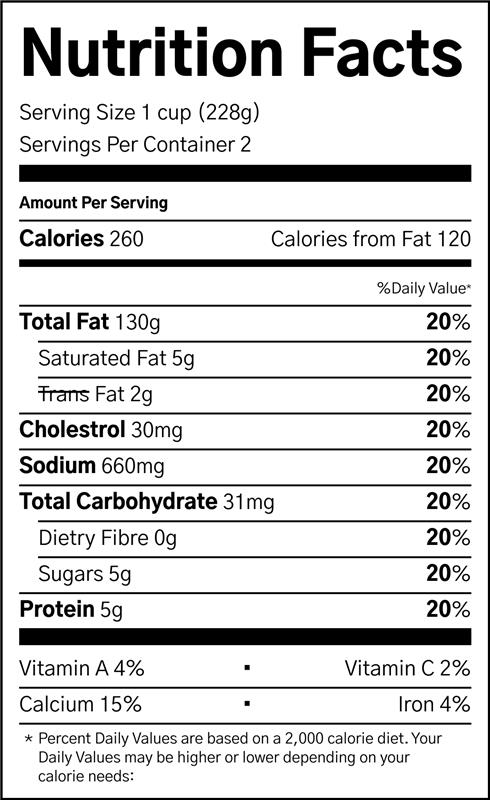
TDS upload, automatic classification, allergen identification, ingredient record creation.
Ingredient selection, formulation build, culinary mapping, BOM auto-population, compliance check.
Split-screen comparison: manual calculation vs. automated regulatory-grade output.
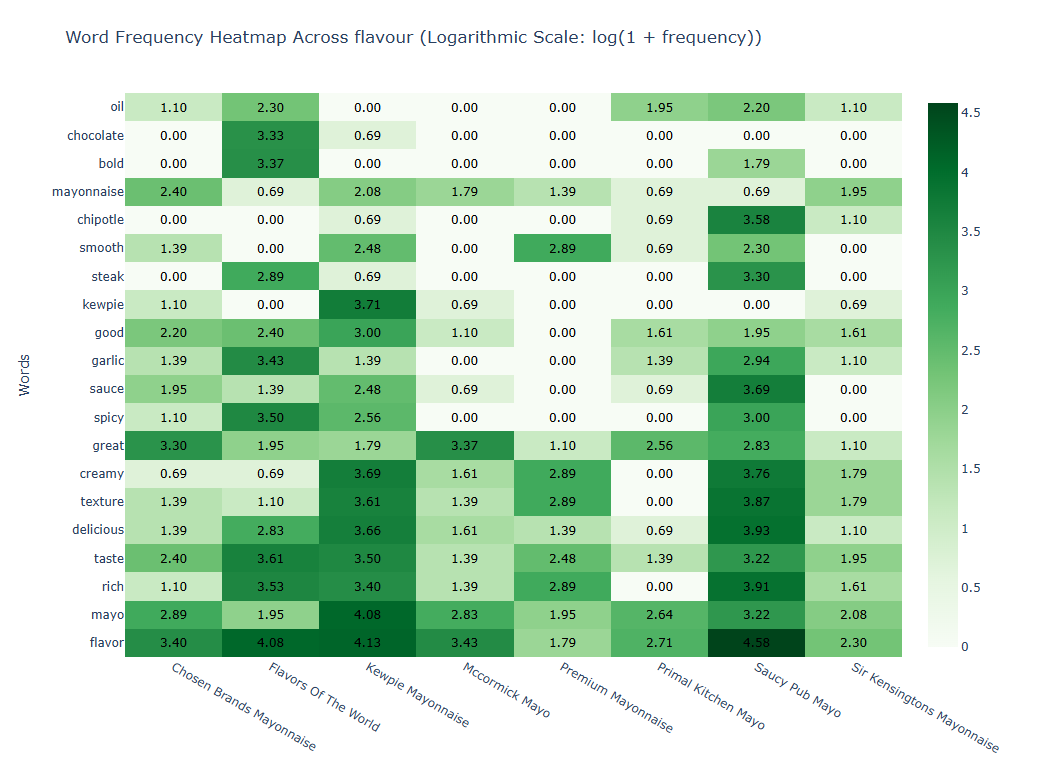
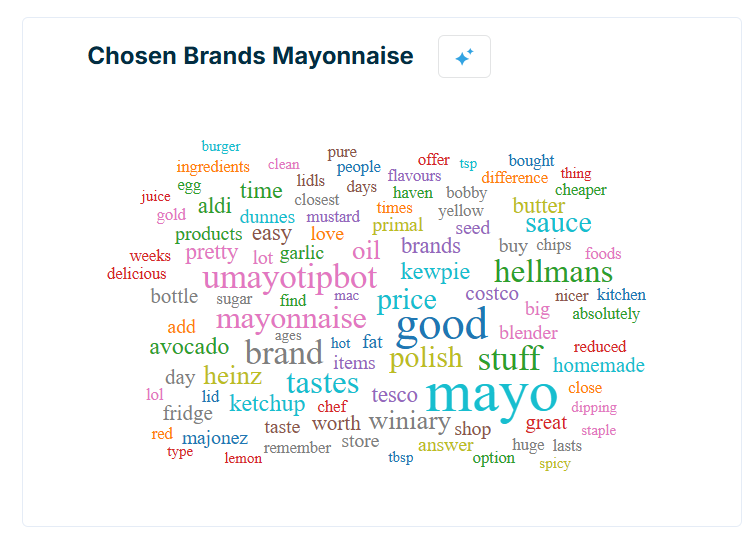
Interactive sample reports, competitor sentiment, eigenvector centrality mapping.
Single governance layer across regulations and internal policy with citations and structural compliance blocking.
Three lanes: channel-led deployment, direct enterprise deployment, and ecosystem-driven entry.
Interactive model for qualified accounts, sites per account, and annual license tier.
Historical services, current platform ARR, and deployment-driven expansion.
Normalized operating view with implied exit run rate based on contracted deployments.
Pacific Foods case with identical process scope and a 28-month acceleration from governance enforcement.
Time compresses while federal and internal governance requirements remain constant.
$3.0M SAFE, 20% discount, $20M valuation cap. Seed execution round, not a valuation event.
Applied AI infrastructure enforcing regulated operational decisions across jurisdictions.
Watch-through %, drop-off timestamps, and replay analysis.
Why governance enforcement is becoming a prerequisite for regulated operations
Regulated industries are approaching a structural inflection. Compliance has been managed for decades through some combination of expertise, process discipline and documentation. That model held because the environment it operated in was slow enough to tolerate it.
The environment is no longer slow.
Regulatory complexity is compounding. Operational velocity is accelerating. And the cost of coordinating compliant outcomes across products, markets and manufacturing partners now exceeds the cost of the work itself.
This shift is already visible across food and beverage, where millions of regulated decisions are executed each year across products, markets and manufacturing partners.
The regulatory frameworks that govern food and beverage operations were designed for an industry that moved deliberately. Product development cycles were measured in years. A company might launch a handful of SKUs annually into a small number of markets. Manufacturing was consolidated. Supply chains were stable. Reformulation was rare.
In that environment, human review worked. A regulatory specialist could hold the relevant requirements in working memory because the requirements were bounded. Documentation could be assembled after the fact because the pace of operations gave you time to catch up.
The compliance function was slow. But the business was slow too. The model worked not because it was efficient but because it did not need to be.
That environment no longer exists.
SKU counts have multiplied as brands pursue personalization, regional variation and channel-specific formats. Manufacturing has fragmented across co-manufacturers and contract packagers, each operating under different jurisdictional requirements, each interpreting the same federal regulation through a slightly different lens. A single product now carries regulatory surface area across formulation, labeling, claims and nutritional disclosure that multiplies with every additional market and every additional facility.
Supply chains are volatile. Ingredient substitutions that once happened annually now happen quarterly. Each substitution triggers a compliance reassessment that touches every downstream document and decision. Reformulation frequency has accelerated alongside consumer demand for clean label, functional ingredients and emerging categories that regulators have not fully addressed. Each reformulation reopens the entire compliance surface.
The result is not a linear increase in compliance burden. It is exponential.
And the coordination capacity of human-led compliance functions has not kept pace. The model was built for a different rate of change.
When coordination capacity falls behind complexity, the failures are rarely dramatic. They are quiet. They accumulate. And they become visible only when something forces them into the open.
The most common failure is inconsistent interpretation. The same regulation applied to the same product at two different facilities by two different quality professionals yields two different conclusions. Neither is necessarily wrong. But inconsistency across an operation creates latent risk that compounds with every product, every market and every manufacturing partner.
Decisions begin to happen outside governed channels. A product development team makes a formulation assumption without confirming it against the current regulatory position. A label claim passes internal review but was never validated against the jurisdiction where the product is actually shipping. These are not malicious acts. They are the natural consequence of a system where the coordination burden has exceeded human capacity to manage it reliably.
Audit reconstruction becomes its own cost center. When a regulator or retail partner requests documentation, the response is not retrieval. It is reconstruction, assembled from emails, spreadsheets and institutional memory.
And underneath all of it, time to market drags. Not because the work takes longer but because the verification takes longer. Every delay represents revenue that arrives later than it should.
The market has responded to this pressure with software. Dashboards that visualize compliance status. Alert systems that flag potential issues. Analytics platforms that surface trends. Workflow tools that digitize documentation and route approvals.
All of these make the existing model faster. None of them change the model.
At the point of execution, a human being is still the last line of enforcement. The tools inform. They do not constrain. And in regulated operations, the difference between informing and constraining is the difference between risk awareness and risk elimination.
The shift that is now underway is not an improvement to existing compliance processes. It is a structural change in where governance lives within an operation.
Governance must be centralized. Not as a policy document or a training program but as a system-level layer through which operational decisions pass before they become outcomes. Regulatory rules, internal policies, jurisdictional requirements and brand standards must exist as enforceable constraints rather than reference materials.
Those constraints must be applied before execution. Not surfaced for review. Not flagged for attention. Applied. The system must guarantee that a non-compliant outcome cannot proceed, regardless of which team initiated the decision, which facility is executing it or which market the product is entering.
This is infrastructure in the precise sense of the word. It is not optional once it exists. It is the layer upon which compliant operations are built.
Removing it means rebuilding the coordination model it replaced.
When governance is enforced at the system level, the verification overhead that slows every regulated operation disappears. Operators do not need to pause execution to confirm that a decision is compliant. The system has already confirmed it. The quality team does not need to reconstruct audit trails. The system has already produced them.
What remains is execution. Governed execution at the speed the business actually requires.
Speed in regulated operations has never been limited by how fast teams can work. It has been limited by how long it takes to verify that the work is compliant. Enforcement removes the verification layer entirely. The speed that results is not reckless. It is the natural pace of operations when compliance is guaranteed rather than checked.
This shift is not theoretical. It is already being implemented through systems that enforce governance at execution rather than relying on post-hoc verification.
The question facing regulated operations is no longer whether governance should be enforced at the system level. The question is how long an organization can continue operating without it.
Every quarter, complexity increases. Every quarter, coordination capacity falls further behind. Every quarter, the hidden costs of fragmented governance compound.
The organizations that recognize this shift early will build on infrastructure that guarantees compliant outcomes at operational speed. The organizations that do not will continue to manage compliance the way they always have until the cost of coordination finally exceeds what the business can absorb.
Compliance is no longer a function. It is an infrastructure problem.
And infrastructure problems are solved once. Then everything builds on top.
Establishing a governed record from TDS and nutritional documents using built-in AI tools for classification, compliance metadata, and nutrition extraction.
Our Recipe Module streamlines formulation from composition to final compliance, with built-in verification for net weight, serving size, and units before market release.
Enforced nutrient computation. Regulatory-grade output without manual recalculation.
Instantly updates with formula and format changes
Nutrition Summary export for internal nutrient review
Formulation Specs export for R&D to production handoff
Use brand-specific consumer feedback to move from raw sentiment to a market-aligned formulation with measurable confidence.
When status transitions from Processing to Completed, the module unlocks a dashboard of graphs and visualizations for:
Consumer feedback is transformed into formulation actions inside the same workflow.
How regulated decisions are constrained, cited, and enforced by design
Regulators evaluate outcomes. Not intent. Not process maturity. At enforcement, the question is binary: was the outcome compliant or was it not?
Liability attaches at execution. As complexity scales across SKUs, markets, and reformulations, manual coordination cannot keep every decision inside regulatory boundaries.
Judgment does not scale when it must also carry administrative and regulatory burden.
RegulateCPG enforces regulated operational decisions at the moment they are executed. Intelligence runs inside non-negotiable governance constraints defined by regulation, jurisdiction, and internal policy.
Governance sits above workflows as a centralized, versioned, and auditable constraint layer. Decisions must pass through that layer before becoming outcomes.
The system cannot return a non-compliant outcome by design.
RAG grounds each governed decision in approved authoritative sources. When the system evaluates a decision, it retrieves the governing text, attaches citation to the outcome, and blocks resolution when citation support is insufficient.
Citations are built for review, refutation, and audit. RAG strengthens enforcement and traceability. It does not expand discretion.
Human expertise remains central for novel strategy, ambiguous guidance, and risk calibration. What changes is boundary enforcement and accountability.
Overrides are logged, traced, and attributable as part of an auditable record.
Every decision has a trail.
Every constraint has a source.
Every override has an owner.
Speed in regulated operations does not come from shortcuts. It comes from enforcement. RegulateCPG is not tooling for regulated companies. It is the infrastructure layer for regulated operations.
Compounding capability through architectural reuse, not disparate features.
Protein quality scoring
Dietary supplement labeling
Production governance enforcement
HACCP & preventive controls
Material supplier synchronization
Sensory evaluation integration
ERP connectivity
Repeatable adoption paths, not opportunistic deals
Adoption follows consistent entry paths driven by regulatory complexity and enforcement requirements.
Standardized multi-site rollout via strategic channel partnership
This lane represents adoption driven through a strategic channel partner where RegulateCPG is introduced as enforcement infrastructure across existing enterprise accounts. Deployment eligibility is governed by regulatory and operational criteria rather than sales targeting. This lane shows structural reach and repeatability, not revenue projection.
Enterprise adoption driven by multi-regime regulatory and operational pressure
(Reference account: Cayuga Milk Ingredients)
This lane represents organizations that adopt RegulateCPG directly when compliance spans multiple regulatory regimes simultaneously and manual governance no longer scales. These deployments validate enforcement where compliance cannot be segmented or delegated.
These deployments support execution for high-protein dairy products supplying large national brands including Nestle, Orgain, and Organic Valley.
Curriculum adoption and standards-aligned replacement
RegulateCPG is embedded as curriculum infrastructure in regulated food and manufacturing programs, replacing legacy compliance platforms. Adoption is limited not by demand but by onboarding and support capacity, reinforcing that expansion here is operationally gated rather than market-driven.
How deployment capacity converts into ARR
Channel leverage converts deployment throughput directly into recurring revenue.
Accounts meeting RegulateCPG deployment criteria
Multi-site enterprise deployments
Standardized annual site license by deployment tier
How enforcement infrastructure monetizes
Revenue generated through consulting, Process Authority services, and early RegulateCPG deployments bundled with services.
Explicitly non-scalable. Market entry and credibility.
Annualized recurring revenue from live RegulateCPG platform deployments across active sites.
Conservative, contractual, and in production.
Incremental platform revenue generated through standardized site deployments at defined license tiers.
Increases mechanically with deployment throughput.
Revenue growth is constrained by deployment capacity, not demand.
The operating model below reflects a normalized, platform-only view of RegulateCPG.
Non-recurring consulting and Process Authority services used for market entry are intentionally excluded. These activities established credibility and demand, but they are not the business being scaled.
The normalized view isolates recurring platform revenue and the operating costs required to deploy, support, and harden the platform.
Run rate reflects contracted platform deployments exiting
2025.
2026 revenue expansion is driven by deployment capacity, not assumed demand.
Earlier market entry without reducing compliance, governance, or process rigor
This case evaluates a single product launch executed under the standard Campbell's launch process, subject to the same federal regulations and internal governance requirements used across the portfolio.
The comparison isolates time-to-market, not scope, rigor, or risk tolerance. No steps were removed, no reviews were bypassed, and no standards were relaxed.
Parent Company: Campbell Soup Company
Brand: Pacific Foods
Product: Canned Flavored Beans
This was not a pilot. It followed the approved, repeatable launch model used across brands and categories.
Sequential governance and review cycles, manual enforcement across federal and internal governance, and full documentation and oversight maintained throughout execution.
Same regulatory requirements, same internal governance standards, and same review checkpoints. The only change was system-level governance enforcement.
Speed was achieved by changing how governance was enforced, not by changing what work was required.
The same governed launch process applied across product lines
The Pacific Foods launch followed the same standardized governance and regulatory process used across Campbell's brands and categories. RegulateCPG did not introduce a pilot workflow, category-specific shortcut, or exception process. This case isolates time-to-market as the variable, not scope, rigor, or risk tolerance.
Federal regulatory requirements
Internal Campbell's governance standards
Documentation, review, and approval checkpoints
Cross-functional signoff requirements
No steps are removed. No reviews are bypassed. No standards are relaxed.
The only variable is time. Time compresses when governance is enforced at the system level rather than manually coordinated across teams. Decisions proceed once compliant instead of waiting for repeated verification across functions.
Because governance enforcement is system-level and category-agnostic, the same launch acceleration applies across canned foods, beverages, dairy, and shelf-stable categories. Outcomes scale with portfolio breadth rather than additional process complexity.
14-slide executive presentation
Last updated: January 2026
Execution capital for deployment scale
This round exists to remove the current deployment bottleneck. Demand, enforcement credibility, and channel access are already established. Capital is required to scale onboarding, implementation, and operational support so the platform can be deployed at the rate the market is already pulling it in.
Hiring and tooling for onboarding, implementation, and customer support to increase site-level deployment throughput.
Operational enablement to activate channel-led rollouts already in motion, including standardized playbooks and partner-facing deployment support.
Engineering and infrastructure investment to support multi-site, multi-account deployments under full regulatory and governance enforcement.
Capital converts directly into deployment throughput, earlier market entry and recurring platform revenue.
Structural embedding, validated channel wedge, and proven enforcement engine. This round funds deployment throughput.
This section is currently under production.